
The Byproduct of a Congolese Tale: A Dialogue with Laurène

the byproduct of a congolese tale
A DIALOGUE WITH LAURÈNE
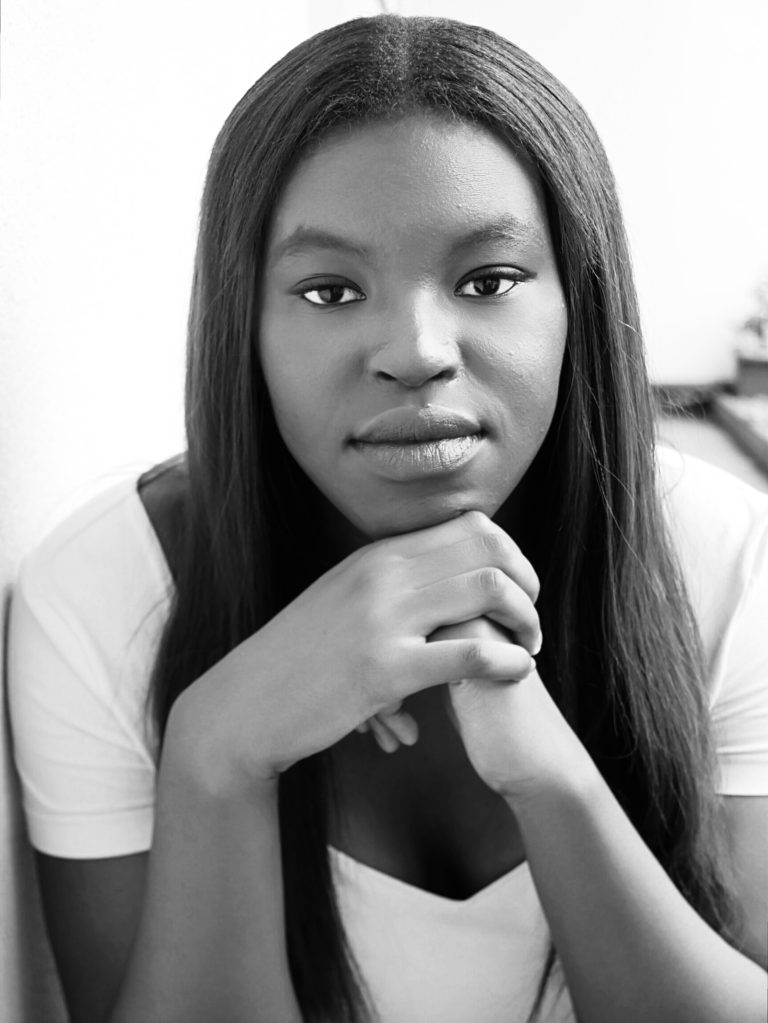
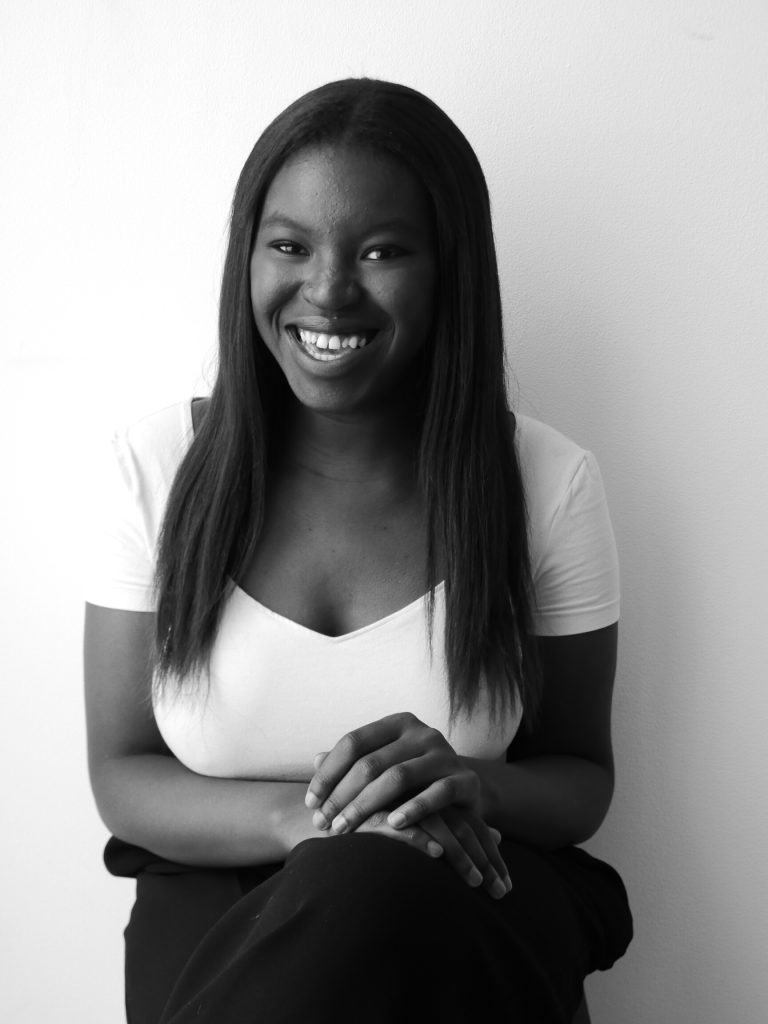
Laurène is a writer of Congolese heritage. From the age of 17, she attended the Vienna African Writers Club in Austria, where she is currently based. The club is led by the Department of African Studies at the University of Vienna and was instrumental in building her strong passion for poetry. In 2021, after a spoken word performance at the African Diaspora Festival in Klagenfurt, she made the decision to take her poetic practice more seriously.
In 2022, Laurène’s participation in a group exhibition titled An Der Schönen Blauen Donau, where her poetry was exhibited in print and audio, proved that poetry could be displayed as well as performed. During Vienna Design Week 2024, she had the honour of performing as part of her second group exhibition, A House is Not a Home by curator and mentor Tonica Hunter.
Laurène was a writer-in-residence at Echo Correspondence until the end of 2023, where she completed her debut full-length poetry collection, titled Child of Congo. Her latest work has been published by Brittle Paper, The Shallow Tales Review and Africa Migration Report.

BY NKATEKO MASINGA
This conversation took place between Austria and South Africa, via email.
Nkateko: Hi Laurène. Thank you for having this conversation with me. The titular poem of your collection, Child of Congo, also functions as the opening poem in the book. What was the motivation behind that decision? I ask this because I believe that a titular poem in itself already makes a powerful statement, regardless of its placement in a book, so why the need to amplify an already powerful image? Was that an attempt to emphasize the urgency with which we need to look at the plight of our loved ones in the Democratic Republic of Congo? To look, especially at you, a child of Congo?
As a reader, I felt as if you were saying to me “I have said this three times. Pay attention,” which is a very rare and beautiful gift to give to a reader, a breaking of the proverbial wall that separates our worlds. You invited me into your world with a question about mine, an invitation to interrogate whether the places I call home are truly the place where I belong… If the intention was what I think it was, you executed it extremely well.
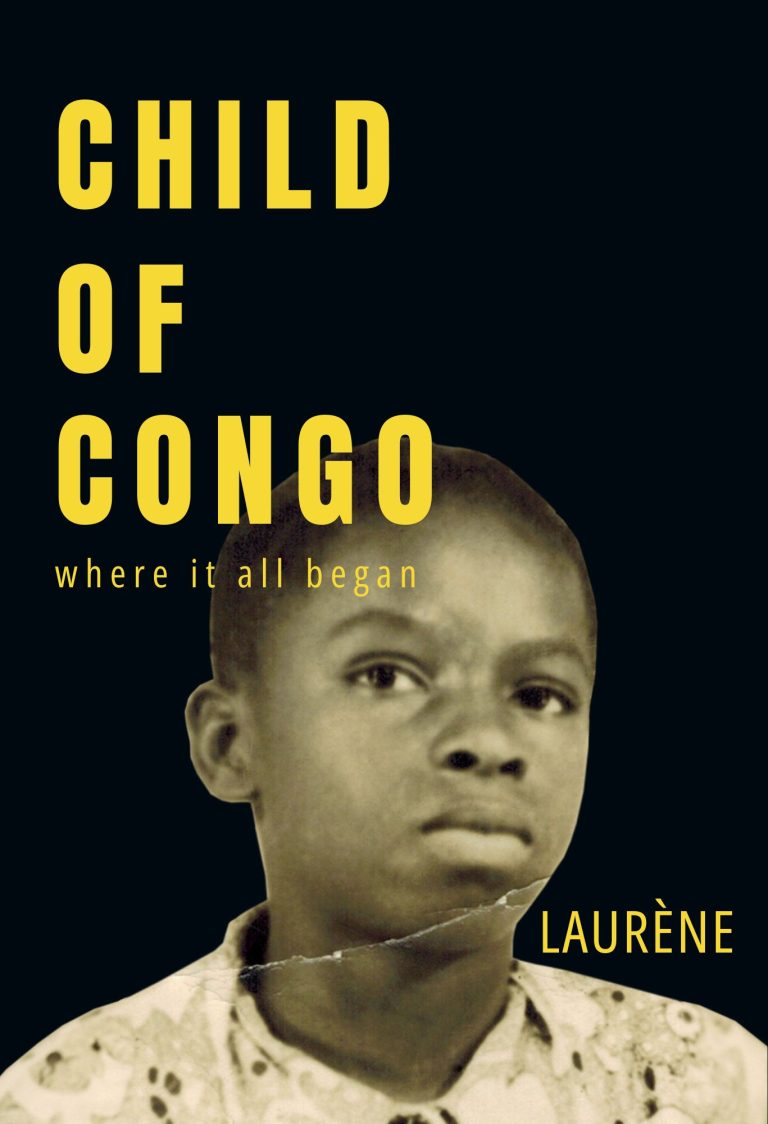
Laurène: That’s a very good question. Despite what some may believe at first glance, when I decided to title this poem “Child of Congo”, I wasn’t referring to myself. I came to this realisation late in the book process; although I am uncovering my past experiences and things I’ve seen, I understand that I’m the byproduct of a Congolese tale. The true storyteller in this book is my mother. You see, that’s her on the cover. I have this weird thing about me that I title a poem of mine before writing the poem itself. It sets me in the right frame of mind and I just ponder for a while, sometimes for months, on how I want the poem (with its title) to exist. In that regard, this is how a piece of my imaginative world gets born.
When the poem “Child of Congo” was completed, it occurred to me that this storyline is uncommon. On that day, I simply decided to use the same title for this imaginary book. In fact, the idea of having my mother’s photo a part of the cover was also concluded before the book was ever written. In this book, you will find that my poems operate almost as a mirror that forces your own reflection. I wanted the pages to feel like a painting where observers are giving the space to develop a personal connection to the tales and interpret them however they see fit.
Nkateko: That is such a beautiful way to honour your mother’s story. I often make the assumption that the “I” voice in a poem is that of the author, but it is important to realise that there may be various speakers in a confessional poem, let alone a collection of poems. Do you always know right away who is speaking in a poem or collection, or does it take a while for you to acquaint yourself with the various narrators in the stories you read and those you write?
In the poem titled “FREE CONGO!”, the title also functions as a refrain, which persists throughout the poem until it is replaced by calls for an encore. This piece is as powerful as it is heartbreaking, as it reflects on a reality that hits home as we speak, a reality a lot of us feel helpless in addressing. Do you think we can anticipate an end to the conflict in the DR Congo in our lifetime? What can we do to help those who are suffering?
Laurène: I don’t think a poem ever has a definite speaker. Just like a mirror, it changes and varies depending on the individual facing the music, so to speak. It’s interesting because even when I write from another person’s perspective or a group of people such as in the poem “Who Would Leave Their Daughter Out in the Sun?” I always make it seem as if I were part of the conversation. In some cases, I am but really what I’m trying to convey is that even as a wallflower, the tales of others have impacted me tremendously.
Prior to writing the book, I knew from the get-go that I didn’t want to make the subject obvious in respect of the individuals involved and simply because their tales are dear to me. There were discussions I had trying to figure out how not to basically become just another trauma dump for profit and handle it with care, if not gracefully. I am not saying there is a right way to unveil a story, but as a creator, I think we hold the responsibility to take care of the content we produce. In other words, who knows? I like to keep the reader guessing. What matters to me is that in a way, the reader can see themselves in the shoes of the less fortunate and therefore, empathise with the “I” in the poem.
Concerning the DR Congo conflict, I think that this is a very difficult question with an even more complex answer. I’m going to approach this, as my father would say, “avec diplomatie”. In Goma’s recent invasion, I had a cousin and his little sister whom we didn’t hear from for days. Prior to the fatal start, I had contacted Congolese people near the city I knew and asked if they could accommodate them just until the troubles would calm down. None of them replied, or at least not soon enough, because my cousins were trapped for several days in this massacre. They managed to escape but they are far from the somewhat comfortable reality they had before.
Years back, I was at the bus stop somewhere in France or Belgium on my way to London and I met this guy. I remember it was late at night and cold, he told me that he was Rwandan and I told him that I was Congolese. We ended up having a heart-felt conversation, exchanged contacts and never saw him again. To this day, that is the only Rwandan man I have ever met and spoken to. During the recent conflict, I contacted him again, and he proposed to accommodate them for a little while. He met up with my cousins, had breakfast and even gave them a little money before heading their separate ways. This Rwandan man I only spoke to once single-handedly reinstalled hope in my cousins’ life without the input and support of people I thought I knew and could confide in.
Empathy in times of adversity does not carry a nationality, a race, an ethnicity, a gender or a social class. All it carries is a heart. I think first of all, what we need to do is recognise the common enemy. I believe what has troubled the entire African continent for so many years is incompetent leadership. This is because taking the example of current attacks, the government is banning protests in the same breath and telling my 20-year-old cousin in Kisangani to enroll in the army. On a brighter note, it seems like the overall political climate is changing, starting from the West African coast with new leadership. Those are young, competent and innovative leaders who are thinking of the wellbeing of their people. It is only a question of time until it reaches the heart of Africa as well. Young Africans are eager for change; it is inevitable.
“Empathy in times of adversity does not carry a nationality, a race, an ethnicity, a gender or a social class. All it carries is a heart.”
Nkateko: On the topic of innovation, I noticed that several poems in Child of Congo make reference to song lyrics, particularly of the hip-hop genre, Biblical scriptures and other works of art within and outside of poetry. If this were an album, music critics would have quite a diverse pool of samples to pull from in attempting to define your unique sound and voice. However, as this is the written word, I believe that through your poetic sampling you have made it clear to readers where your poetic and political lineages intersect. As much as the work speaks for itself in many ways, I am very interested to know more about how rap music and the Bible have influenced your work and political ideology.
Laurène: It’s funny because my music pool is fairly larger than just rap music; however, it just happens that the poems I selected for this edition consist mostly of rap references. For me, music and writing go hand in hand. I listen to music as much as I write down my thoughts. It also occurs that whenever I listen to a song that speaks to me, I tend to visualise, some might call it hallucination, an entire story as the song unfolds until the very end. Naturally, sometimes I choose to write the story that I visualise down, other times I don’t. It can be totally fabricated or something that occurred to me in the past and often enough over-dramatized. Let’s just say I have a vast imagination [Laughs]. It is a mixture of wanting to hold on to a feeling, a moment or simply letting the music carry you to another universe. It might sound crazy now that I think of it; however, I have a profound intertwining with music that allows me to escape reality and inspires my writing as a result.
When it comes to religion, I have a similar yet complicated relationship but, I am going to focus on the Bible aspect here. Truthfully, I started reading some bible passages as poetry when I was made aware by a teacher how to interpret the book from its very first page onward. It’s like a whole new world opened before me. I understood then to basically not take everything by face value. Just like poetry, there are hidden messages, symbolism, double entendres and all tricks from the old age. The moment I started reading the Bible like poetry, their tales suddenly made sense to me. Beside the fact that I ingrained in me a lot of its world values, I also find comfort in the words of the Bible. This part of myself which I usually keep behind closed doors is an element I am proud to have displayed. I don’t even know if it is something other poets have come to explore in the past, but it does appear to come out naturally for me.
Nkateko: Your poem “Flawed” is written in the form of a questionnaire. This is a brilliant experimental poetic form and it took me back to the first time that I read the poem “Map Home”, by Fatimah Asghar, which is in the form of a crossword puzzle. In my workshops I speak of poetic forms as different containers in which one can pour the contents of a poem, depending on how they would like to present the words to the reader. In poetic forms where the reader is required to fill something in, such as “Flawed” and “Map Home”, it is almost as if the speaker is making room for a conversation, a breaking of the proverbial wall between the author and reader. Can you tell me about your approach to poetic form in your writing? I do not believe that there are any rhetorical questions in poetry, so I am very curious about what readers’ responses will be to the questions that are posed in your work. Are you looking forward to the process of engaging with readers?
Laurène: It’s interesting because when I read Wanda Coleman’s poem which was a doctor’s report and where my personal poem is referenced from, I did not think about how I engaged with her vision to be honest. But moreso, the space in which the poem exists and how eccentric and unconventional its form looks on a blank page. Have you ever felt so many negative emotions at the same time that your reaction comes out as… Weird? I remember the last time I felt this way and I just wanted to scream in the middle of a subway quite a few times. My screams don’t belong in a subway, they occupy a space that is not thought for mental breakdowns. In that same way, you wouldn’t think of a poem as a doctor’s report or a questionnaire. However, in that instance and due to how I felt, a poem appearing in the form of a questionnaire made sense to me. Most importantly, it made sense to how I wanted to express my thoughts on paper.
For me, every poem I write engages a reader. No matter if it fills an entire page or just two lines. You know, I always write on the edge of my seat, metaphorically. I can’t remember the last time when my life was ever still. That lack of stillness and constant distortion urges me to find ways of a call to action. That could be physically as a reader fills up an imaginary questionnaire or a mental exercise and uncomfortable topics are brought up to reflect upon.
Nkateko: Wanda Coleman’s poems as doctors’ reports, maths problems, multiple choice questions… The range! I am obsessed with the work of writers who endeavour to use language in strange and interesting ways. At the same time, I am curious about the juxtaposition you are making between expressing overwhelmingly negative emotions in a socially unacceptable way and finding the rigidity of poetic form, albeit unconventional, to be a suitable alternative outlet. How do we reconcile the two? Why the pursuit of a neat, respectable way to address our emotions when the circumstances from which those emotions originate are chaotic and ruinous? Why should our work not be as messy as the feelings we write about?
My suspicion is that we make room for the chaos in the white space on the page, the unanswered questions, the blank columns and rows of a crossword… I just don’t know if it is an act of suppression on the part of the writer to redirect the pain into something neat when the inner storm is still raging, or if there is freedom in reimagining the rules of craft. Personally, I am only able to write about a situation as soon as I have processed it, often in self-destructive ways, so I think that poetic form gives me an opportunity to pack my filtered chaos into boxes or containers that the reader then gets to access and unpack in their own way. I do not know yet if this is effective, but as one of the speakers in your book asks, “When you’ve already abused all substances there is to numb the pain. Who is left to blame?” I realise that it is the remnants of my pain that I take to the page, not the essence of it.

Laurène: I think that this would bring us to one aspect of writing we do not tend to speak enough about and you, Nkateko, have far more experience in that realm than I ever will. The literary industry which I only saw a glimpse of when I first attempted to follow more traditional approaches of publishing. In my opinion, not only boxes the writer in from its true potential but also controls the narrative of what the readers are consuming. Let me explain; actually around the same time a year ago, I applied to an African manuscript prize that demanded all of the poems within the collection to be in English. Not only am I multilingual, I happen to have one poem “Étranger” that I kept in French and intentionally so because in its original form, I believe it is perfect. This is the first poem I recited in front of my mother and she cried afterwards. At the time, I had never witnessed my mother cry before so you can only imagine the power I thought I had discovered in writing. Removing it from the poetry collection wasn’t an option to me as well because this poem was part of the journey.
What I am trying to show is context matters, and I don’t think there is a writer on earth that doesn’t think about the blank spaces between every line, yet this right is altered and taken away from the writer for the chance of getting published behind a well-backed system. In no other creative industry would that right be taken away from the creator but in writing, it is permissible. And that is just one little example; however, I spent almost a year applying to different projects that did not cater to me at all because of the limited narratives available in that space. Is it not my canvas and my story that I’m trying to paint? Themed poetry, manuscript competitions, grants, you name it! And it seemed in every box they tried to place me in, I did not fit. If it wasn’t for my location, then it is the language that I write in. If it wasn’t for the number of lines, then it is the title of the poem. Like can you imagine? A space that should allow writers to come as who they are, yet limiting the number of lines you may express yourself in.
I told the Poetry Society last year at the London Book festival after Yomi Sode’s panel discussion that the industry cannot continue to pigeonhole certain regions and one-format of writing when in my experience, I am based in Vienna, I feel most comfortable writing in English and I write about Congolese tales, the unconventional way. That narrative has as much right in this space than all buzzing pieces of work. To be honest, I don’t even read poetry anymore because nowadays it is all the same!
One of my favourite modern poets is called Mustafa and he’s from Regent Park, Toronto. In my opinion, he is one of the most important voices in the writing space today. Why can’t I find any of his poems at the Poetry Foundation webpage? I used to read their ‘Poem of the Day’ everyday. After a while, it became clear to me that they favour the dead more than the living. Little is done to preserve peculiar narratives but under the same breath, the writers we idolise from the past are exactly the type that wouldn’t have altered their work to fit into the popular narratives and boxes provided in the present space. So where is the disconnect here? That’s just to say, I am not here to criticize the literary world, I’m making simple observations as an outsider. But when you mentioned why modern poetry follows a certain format when our creative expressions are boundless, that is the first barrier I could think of.
One more thing, the moment you give yourself up to how others want your writing to look, then at some point, they won’t have to ask you about altering anymore because it would be programmed within you! Your brain will automatically let you know, to be considered for so and so, my writing needs to look like this, the theme must be about this and I don’t know, maybe I need to move to the UK or America for more opportunities if I’m a writer from Cape Verde, for example, because I can’t get published in most African literary publications as they focus on writers in their own region, and if it’s not their nation than it is their tribe. Oh and also, I should cater to this agenda because that is what sells and what publications want to push. Do they not see that this is what they are forging in us?
Nkateko: I agree wholeheartedly. “Étranger” is indeed a perfect poem, and what you have just shared now makes me think about the magic of the creative process and how some works of art come to the artist fully formed. Removing a poem that is pivotal to the existence of a manuscript is the equivalent of removing an essential organ from the body. I believe that the preservation of authorial autonomy has to overrule what any publisher believes will get books off the shelves. The inaccessibility of the traditional publishing space has had the unexpected outcome of fostering resilience in indie authors, who have shed the “vanity publishing” label long associated with self-publishing into a more affirming narrative: I write what I like, I refuse to be censored and I will tell my story on my terms.
A friend of mine used to say “I will not die without saying what killed me” and I later adopted that mantra because I believe in the power of the individual story. Anyone wanting to dictate how you tell your story is depriving you of the opportunity to identify the hand against your throat. So much of our history remains undocumented because of gatekeeping and censorship and it is conversations that challenge the status quo that will take us forward. Your concerns are valid, and you are right to criticise the literary industry because there cannot be meaningful progress without change. The revolution of African literature and publishing is long overdue.
An interesting stylistic choice I noticed in Child of Congo was the contents page including not only the titles of the poems but also what I assume is the year that each poem was written, or first published? I found this fascinating, and it made me wonder if one were to collate the poems from each year into a selection distinct from the delineation made by the roman numerals within the book, would the sequence tell a different story to the one that exists as the final version? How many versions of the sequence and order of the poems did you grapple with before you knew the book was complete and ready for publication?
Laurène: Naturally, the book follows two periodic tables; the first would be the chapters in which I organised them, and of course, the year each poem was executed. This is a touch I actually implemented because of an application that demanded the year of creation to be mentioned. And so, even as I embarked on a completely different journey, I decided to keep that detail as part of the ensemble. It is important for my readers to understand that the tales from this book are just that; Congolese tales. I wasn’t aiming for historical accuracy in this body of work. The years empathise with the notion that this is coming from the perspective of a child and just like a child, they don’t know and understand everything that they’re exposed to.
An example could be the definition of the word ‘Kongo’ which last time I checked, it had two new meanings by Congolese scholars I found somewhere on the internet. A lot of these entries are how I used to think then but not necessarily how I would unveil them now; however, they are part of the journey so I left them at their original form so that they can be embraced, absorbed, just like a child, for their innocence, their naivety, lack of understanding, or even lack of how best to communicate one’s emotions because I wasn’t always the best at doing so. To paddle back to censorship, who says that a poem needs to be perfect? I love reading Kennedy’s unedited speeches that you can find online if you’re attentive enough. It’s like having a front seat at observing an entire thought process to its final touch. You can track their frame of mind as they come to a conclusion. It is a subtle yet intricate detail that offers a little bit more merit or perhaps is just good to know, depending on the reader.
What the change of sequence would unveil is life with its ups and downs. Days of hope and days without them. I have to say my intuition was very much set on the order, even before I began putting the pieces of the puzzle together.
Nkateko: The analysis of literature and film teaches us that children are inherently unreliable narrators as their perspective of the world is framed by inexperience, misconceptions and a lack of nuance due to youthful naivety. However, there is a tendency to forget that reasoning when reading or watching a story concerning a child who has experienced suffering at a young age. We somehow expect that because they have been forced to grow up too fast due to political or familial affliction, they should be able to process their experiences as an adult does. A child who has been forced to take on traumas and responsibilities far beyond their age is still a child, and their reasoning and understanding of their circumstances remains that of a child. A lot of the time they even blame themselves for what is happening around them as they have not learnt to differentiate their own identity from the familial and other social contexts they exist in. I think that our readers will appreciate your foregrounding of the story when they get to read the book in a few weeks, as you have provided the necessary frame of reference through which to observe the various speakers in your poems.
Thank you so much for having this conversation with me, Laurène, and for allowing me to sit in silence with your work before the rest of the world gets to read it. Child of Congo is a masterpiece. Is there anything else that you would like our readers to know about your book ahead of its official release?
Laurène: Thank you for taking the time to understand the book and for allowing me to dwell on its tales. All I want people to know is that it took a lot from me to get to this point. What I mean by this is there were lots of brick walls, sleepless nights and split relationships to get here. It’s not that I regret the sacrifices, you should know this is the hardest I have ever worked on a project on my own. That’s all.
Nkateko Masinga is an award-winning South African writer whose poetry has been translated into French, Bengali, Tamil, Kannada and Romanian. Her latest book, Daughter Wound, was published by UK publisher Hazel Press in April 2024 and was named Book of the Week at the London Review Bookshop in the first week of its release.


Great post , thank you for sharing.