
Finding our Footing in History: A Dialogue with Slim Shaka

FINDING OUR FOOTING IN HISTORY
A DIALOGUE WITH SLIM SHAKA
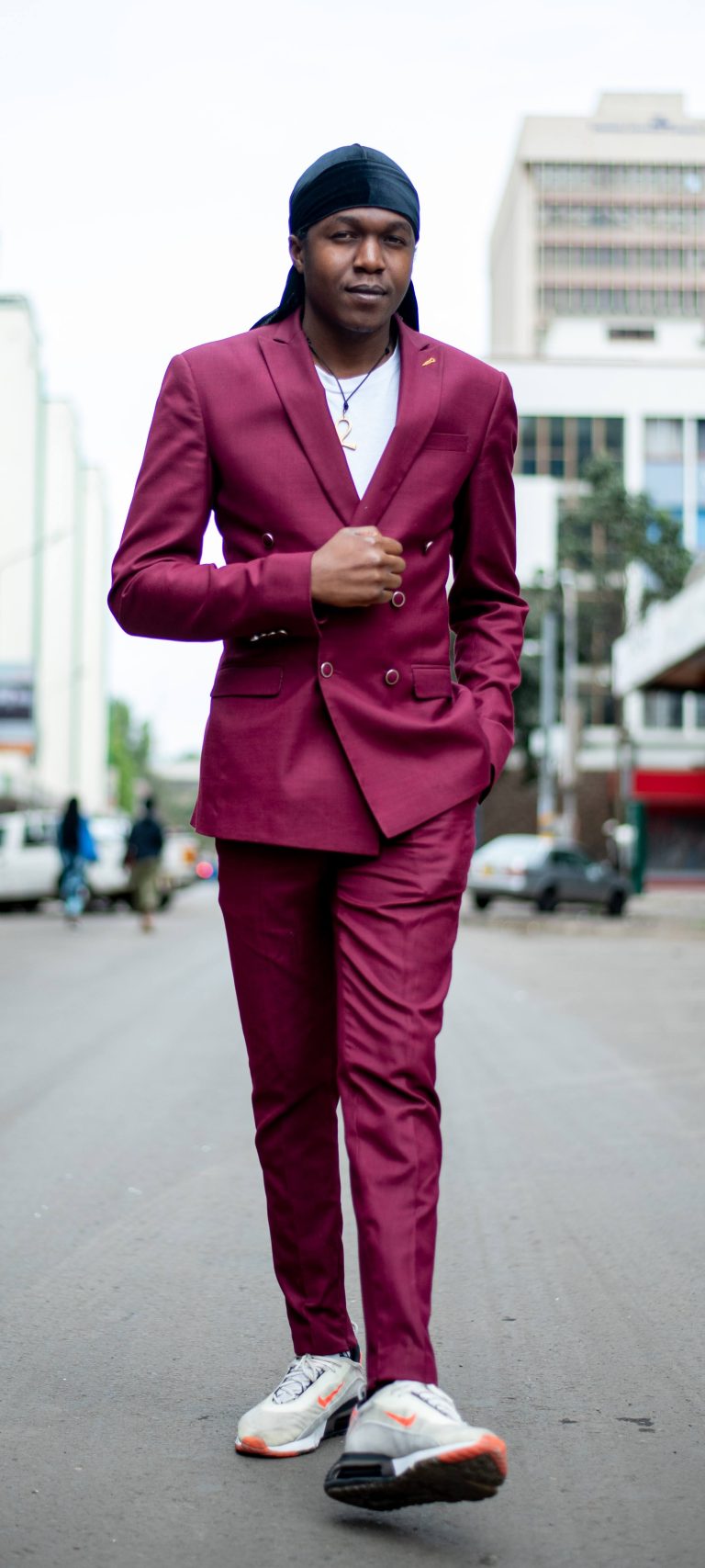
Slim Shaka is a performance poet and storyteller based in Nairobi, Kenya. He is the reigning Poetry Slam Africa Champion and a finalist at the 2023 World Poetry Slam. He has written and staged seven poetry shows, the latest being OF A DYING BREED, a poetry show seeking to explore the challenges faced by young people finding their footing in history.

BY NKATEKO MASINGA
This conversation took place between Kenya and South Africa, via email.
Nkateko: Hi Slim Shaka. Thank you so much for agreeing to have this conversation with me. We recently met at the Poetry Africa Festival in Durban, South Africa. I am grateful that we got to share a stage during the festival and a traditional meal after (Ace Butchery squad forever). Could we have a quick debrief about the entire festival experience for you now that you are back home?
Slim Shaka: Hi Nkateko. It was an honour sharing the stage with you alongside other awesome creatives at Poetry Africa. The (Slam Jam) Poetry Slam final was a highlight for me, the way those poets just rode on adrenaline laying it all bare on stage, the vulnerability…Oooof, unforgettable energy!
The walk along the beach, that Ace Butchery meal? Legendary! There was just so much greatness all around.
The festival and Durban was a perfect mix of beauty and perspectives. I met wonderful people who I look forward to growing in friendship.
Nkateko: The Slam Jam final was a highlight for me too. It was such an incredible display of artistry. The walk along the beach was quite sentimental for me as there is a picture from 2018 that I wanted to recreate at Bay of Plenty on the South Beach and I got the opportunity to do so that day. The Ace Butchery meal is forever immortalised through your “sit die ding in die lug” video with Emma Ofosua. I am interested in the notion of beauty and perspectives. Can you tell me more about the impact that gathering with artists from all over the world at different festivals has had on you over the years? Has it impacted you on both a personal and professional level? What unique perspectives have you come across during your journey as an international poet?
Slim Shaka: You know, I kept wondering why you were so particular about taking photos at that very spot and then it all made sense, right there was the treasure of reliving a golden moment. Emma and I wanted to do that Tik Tok challenge but we didn’t know how, all we knew was, we wanted to dance to that challenge. Right before giving up the universe brought you, our choreographer. We butchered it but you allowed us to have fun in the process (Laughs). You are appreciated.
Traveling is beautiful, especially as an artist because it is easy for people to let you in on their lives. I loved Brazil, their women are hot! Tanzania has really good street food and wonderful music, South Africa was just wonderful.
Meeting people from different backgrounds also changes the way I understand myself and my craft. To see myself in other people, to try their shoes.
“I have read lots about Shaka Zulu, to achieve a state of existence so profound that two centuries later his name remains a statement of enduring power. I find that incredible, and to have set foot in the area of his birth is very special to me. Seeing sign posts, roads and amusement parks written “Shaka” was just so flattering. KwaZulu-Natal and I were like new love birds, starting into each other’s eyes like we’re auditioning for Romeo and Juliet.”
Nkateko: ‘A golden moment’ is such an apt description for what it meant to me to take that picture. There was a TV show called “Bay of Plenty” airing on South African television in the early 2000s and I was obsessed with it. It was a youth drama about a group of lifeguards living and working on the Durban South Beach, all while facing the challenges of young adulthood.
That show made such a strong impact on me that when I visited Bay of Plenty for the first time in 2018, it symbolised for me what I imagine it did for those characters in the drama: a bay of plenty / a place of abundance, so I have experienced my own ‘plenty’ there both six years ago during my first Poetry Africa experience and again at this year’s edition of the festival.
I had a lot of fun directing that video. You and Emma were so patient with me as I was figuring out how to get the timing right so that I could count you into the music. You are appreciated too. Watching that video and seeing the smiles on your faces warms my heart.
What you have described about Brazil, Tanzania and South Africa is how I feel about traveling too. I lived in Kenya for a while and Nairobi still has my heart. You and I had a conversation about Tusker Lager the other day at the airport. In my opinion, Tusker is the only beer that makes sense taste-wise. Stella Artois takes a close second but Tusker is delicious. I’m still upset with you for that. I forgive you for choosing Brazilian women over South African women but I draw the line at Tusker slander.
Slim Shaka: Talking about this TV show got me thinking a lot about young adults and the pressures of life we have to deal with. The generation that came before us don’t get it, they don’t understand why most of us aren’t too excited about getting married “early enough”. They don’t get why most young people are quitting their jobs and pursuing their passions. The generation that would seem liberated still is one that is most affected by drug addiction. Still, as a generation we find balance. That we always find out way home, back to sanity.
I think the most powerful statement I’ve read this year was “Forgive yourself for the ways you’ve had to heal your pain” by Lora Mathis. This I share with all my friends whenever I feel they need reminding.

About Brazil, it’s important that I also talk about the indigenous people I met. Their love for Africa is immense. I gave them stories about my tribe and culture and they shared theirs. They shared their immigration story and how their ancestors migrated from Congo. I’m Luo, my ancestors too came from Congo to Sudan then to Kenya. At that point we hugged again, addressed each other differently because we discovered an identity that was lost.
They also have a beautiful tattoo culture; it was hard to spot a Brazilian babe without ink. I’d ask random people about what those tattoos meant and I realised that most were either inspired by a cultural phenomenon or love and family. You have some fire ink as well. I’d love to know the story behind them.
Now about South Africa, so before flying to Joburg I was in Tanzania for the Marafiki Arts Festival. ‘Marafiki’ means friends. There I met a South African dancer, a cool guy named Nkosi. We became friends & later realised we were on the same flight. I got sick during the journey and this guy took care of me like I was his twin. He even followed up and ensured that I got everything I needed for my journey to Durban from Joburg. That is how brotherhood invited me to South Africa.
Nkateko: Right? We are adjusting to a version of life that is unscripted and unprecedented. What you’re saying about marriage definitely checks out for me because the conversations I am hearing and that I am part of regarding long-term commitment revolve around job security and financial stability, and very few of us feel confident that we can bring a spouse and children into our already precarious situations.
Choosing a career in the arts definitely complicates things even further because work has never been a guarantee for us and with our industry still recovering from the effects of the global pandemic, it might never be. Who wouldn’t be on drugs under such circumstances? I don’t mean to make light of what is a very serious situation. I genuinely believe that it is impossible to be well-adjusted in a world that is at war and in shambles. We may pretend to have it all together but we are all hurting. I love the optimistic perspective of finding our way back to sanity but I think that insanity is warranted under our current circumstances.
You see? I knew there was a lot more depth to your commentary on Brazil than the physical appearance of the women (laughs). I absolutely love the fact that you exchanged stories with the indigenous people and found a commonality in your lived experiences and ancestral history. One of my closest friends is from the D.R.C, so whenever someone speaks about Congo I have to ask which one: Congo-Brazzaville or the Democratic Republic of Congo?
That segue from the tattoo culture in Brazil to my tattoos? I nearly missed that last part because the transition was so smooth! (Laughs). I actually fell in love with tattoos while I was living in Kenya. In 2019 I met and became friends with an amazing group of Ugandan refugees who were living in Nairobi while awaiting official resettlement to Canada and the U.S. One of my closest friends in that group was like a sister to me and about a year into my stay in Nairobi, we got matching butterfly tattoos. Since then, I have documented every major life transition with a tattoo that symbolises my growth and rebirth. I often joke that I am a completely new person every six months, but it’s true to some extent. I am on a constant journey of self-actualisation and my tattoos allow me to mark the periods of significant growth or change.
Your anecdote about the Marafiki Festival and meeting Nkosi warms my heart so much. The name “Nkosi” means “king” in isiZulu, so this man sounds as if he truly lives up to his name. I am certain he recognised a fellow king in you. You have a very regal presence and demeanour; do you know that? Do you know about Shaka Zulu?
Slim Shaka: I agree, choosing a path in the arts undeniably amplifies life’s complexities. I like that perspective; knowing that optimism is vital, yes, but so is validating our struggles. I guess the most honest response to madness is a bit of insanity. Yooo, I just want to make lots of money and enjoy life.
What you’ve said about the great legend, aaah to be paralleled to the great Zulu king is high praise. You should see the smile on my face right now Ha! Thank you.
Nkosi is indeed royalty, this conversation makes me more conscious about the importance of appreciating people, it reminds them how awesome they are. I will give him a call.
I have read lots about Shaka Zulu, to achieve a state of existence so profound that two centuries later his name remains a statement of enduring power. I find that incredible, and to have set foot in the area of his birth is very special to me. Seeing sign posts, roads and amusement parks written “Shaka” was just so flattering. KwaZulu-Natal and I were like new love birds, starting into each other’s eyes like we’re auditioning for Romeo and Juliet. I’d see a sign and a voice inside me would giggle and say “Stoooooop!”, then giggle some more. All this while maintaining a straight face.
Life is just so wonderful, how you found a part of you in Nairobi, I found mine in South Africa and this is happening to millions of people every single day. Maybe love will eventually win and to think a world without war wouldn’t seem blissfully naive.

Nkateko: What would an enjoyable life look like for you? Once you have made lots of money, as you say, do you imagine your life being completely different to how it is now? I often wonder if we really take the time to acknowledge our victories, or if we are always chasing the next thing. I’m not saying that’s the case with you, but I think that you have some amazing achievements under your belt and I hope that what you have already accomplished has added joy to your life. Can we talk about the Poetry Slam Africa Championship, which you currently hold? Before this interview, we briefly discussed this as you were concerned about there being confusion between the Poetry Africa slam (Slam Jam) and the Poetry Slam Africa Championship. Could you elaborate on this so that our readers are aware of the title you hold and the opportunities it has afforded you since your win?
Slim Shaka: I believe I have savored the sweetness of life, and truly, the joy of having great friends. Now this one needs spicing you know, lots of money! I love money conversations, I like when I’m being paid good good moolah. So now an enjoyable life for me would mean to travel more around the world, owning a ranch and building a home in a quiet place. I find nature’s tranquility beautiful, this one I’m definitely going for.
About Poetry Slam Africa, this is Kenya’s national slam but the finals invite a number of slammers from outside the country to compete as well. In the one I competed, a poet from Zimbabwe and another from Mozambique were accorded wildcards and joined the competition. It was the second time I was slamming so I had learnt a lot during the competition. I won by a slim margin (Laughs). Just 0.2 points. Winning a slam is usually about being the poet of the day and not necessarily the best poet. Chioniso Tsikisayi from Zimbabwe was the first runner up and I am a big fan of her work.
Winning the Grand Slam holds great prestige in my country; those who achieve it get to be addressed as King/Queen. You know what they say: “To whom much is given, much is required.” However noble, a Slam King is required push limits, break the glass ceiling, to achieve something new and challenge whoever lifts the crown next. When the World Poetry Slam Organization changed the selection process for African poets I knew we had a chance, it was fair & open. We submitted our pieces, The judging panel was diverse & the results were there for everyone to see. I gave it a shot & found myself chilling in the beach with hot hot Brazilian babes. To be the first poet in my country to do that is special. Now I look forward to supporting our next champ into this awesome journey.
Nkateko: That sounds absolutely beautiful. I believe that you will soon have the life that you desire. Now that you explain that the Gland Slam champion is given King/Queen status, I now know why you have such a regal presence. You are indeed a King! It has been an absolute honour to have this conversation with you. I wish you the very best with your current and future pursuits, and I will see you when the gang reunites for a traditional meal in another African country.
Featured images of Slim Shaka by Murathe Ngigi.
Nkateko Masinga is an award-winning South African writer whose poetry has been translated into French, Bengali, Tamil, Kanada and Romanian. Her latest book, Daughter Wound, was published by UK publisher Hazel Press in April 2024 and was named Book of the Week at the London Review Bookshop in the first week of its release.


