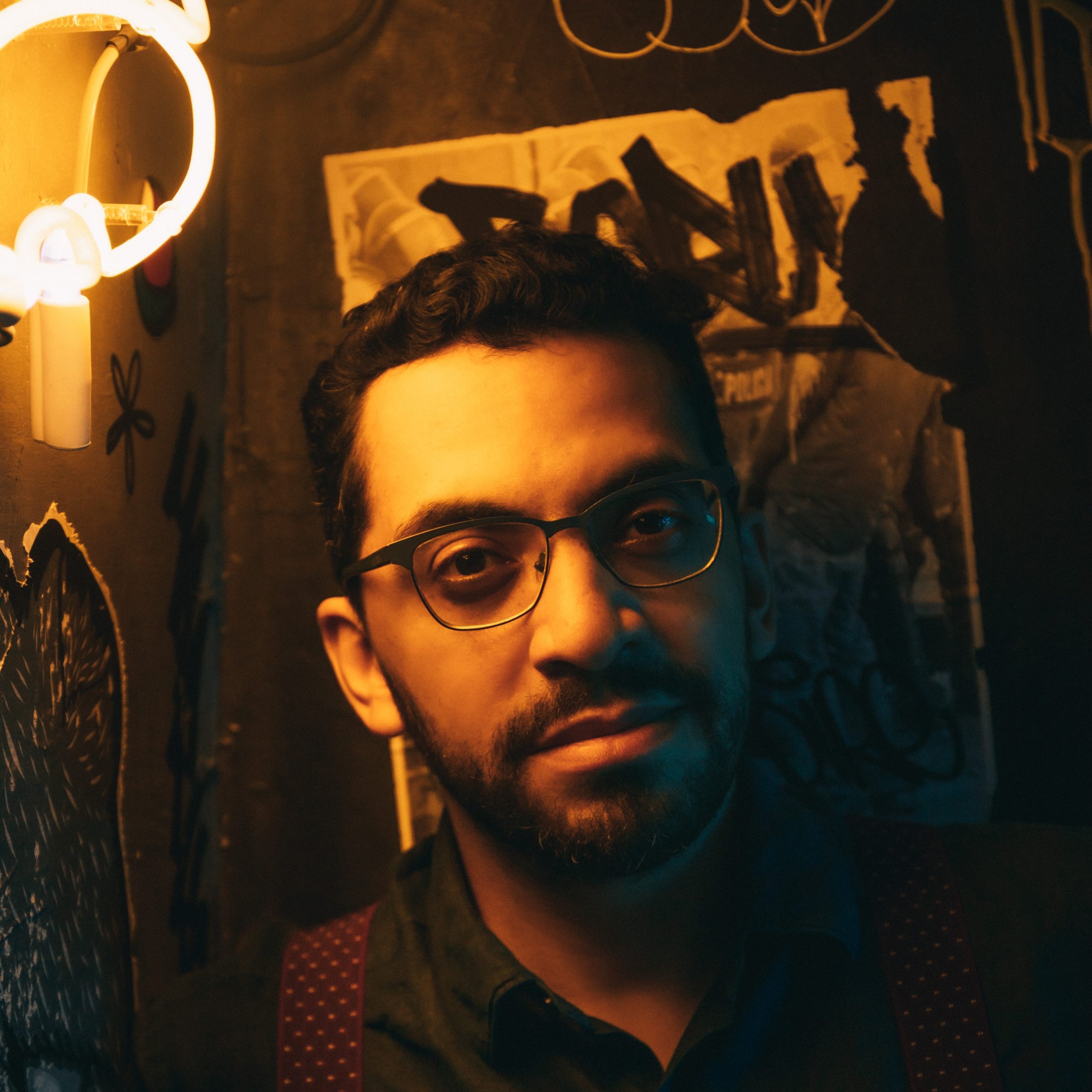
An Involuntary and Necessary Art: A Dialogue with Chiamaka Okike

AN INVOLUNTARY AND NECESSARY ART
A DIALOGUE WITH CHIAMAKA OKIKE
Chiamaka Okike is a multi-disciplinary writer. She is the author of the novella, Seeri. She is also the author of short stories and articles ‘Chewed Glass,’ ‘Return to the Sun,’ ‘Fuchsia Pink and Midnight Lace,’ ‘The World is Dancing to Africa’s Tune,’ ‘Amore E Liberazione,’ ‘A Name No Mother Would Give You,’ ‘Songs about Surulere,’ ‘If People Are Art Then Museums Are Graveyards,’ and ‘14 Lasts Forever’.
The author grew up in a quiet little community in Ibadan, Nigeria and it is here that she cultivated her relationship with long walks and literature. After putting it off for years she finally got round to taking her writing seriously. This has led her work to be long-listed and shortlisted for the Disquiet International Literary Prize, the Leicester Short Story Award, and the Elegant Literature’s Short Story Award.
She has edited The Woman Issue by Isele Magazine, spoken at various workshops and panels, and delved into creative non-fiction, with words and appearances in Midnight & Indigo, The Kalahari Review, Narratively, Wilson Quarterly, Edinburgh’s Literary Salon, Brittle Paper, Iko Africa, and ActiveMuse.
In addition to writing, Chiamaka has planned, curated, and hosted five literary across two continents for her novella, ‘Seeri’ and mini short story collection ‘Chewed Glass.’ These events have been sponsored and supported by the likes of Aunty Tanty, DANG Lifestyle, Karma Drinks, Freebooks campaign, Shelf Interest, Hotel Zamara, Agua de Madre, Bubba Oasis, and others.
Full details of all her work can be found on her website.

BY NKATEKO MASINGA
This conversation took place between Ibadan, Nigeria and Pretoria, South Africa, via email.
Nkateko: Hi, Chiamaka. Thank you so much for having this conversation with me. I read Seeri in one sitting and I am still reeling from how it threw me headfirst into Kewa and Tajudeen’s world, completely unprepared for the journey I was about to take. There is an enchanting gentleness to how the two protagonists handle each other when we first meet them, so much so that a scene that could, to the untrained eye, be interpreted as chaotic, instead comes across as fragile. When Tajudeen holds Kewa’s waist in an attempt to calm her down, it feels like an acknowledgement of that fragility, and it is a safe and reassuring touch. I have to say though, the electricity in that moment alone could power an entire city.
Chiamaka: Hi Nkateko. First of all, thank you for reading! In the beginning I wanted to find a balance between a sense of plot urgency while also introducing readers to the people they would spend the story with. I also wanted readers to get an immediate sense of their relationship dynamic: gentle, caring, deeply in sync, and familiar. These words feel almost antithetical to ‘electricity’ but I’m so happy you used it as a descriptor. I like novelty as much as the next person, but I must admit that I feel most free and energised in relationships where we’ve regimented intimacy.
Nkateko: You achieved that balance really well. I hear and share your sentiments regarding the stark contrast between tenderness and electricity, because the latter has the ability to cause irrevocable damage if mishandled. However, I believe that a lot of what pulls us into the dual protagonists’ relationship exists in contradictions: in the taxi, we are faced with the juxtaposition of bridesmaids accompanying a bride-no-longer-to-be, alongside two friends leaning into the collective assumption that they are a couple while they actually are on their way to confront an ex. That rideshare in its entirety left me feeling more empathetic towards Kewa and Tajudeen.
I admit that I too have lied to strangers about a friend being a partner to avoid questions about our displays of affection. I was taken back to that time of my life while reading, and I think that is the electricity I felt in that initial face-me-I-face-you scene at the beginning; your fictional depiction of the experiences that we have in reality but rarely speak about, the ones that exist in the margins of the selves we present to society in exchange for acceptance, connects us to these characters and makes them real. How did you decide on a narrative style for this book, especially since you needed to flash back to past incidents and memories while keeping us rooted in the immediate action of the story?
Chiamaka: I have to admit that a lot of the contradictions and juxtapositions are unintentional. I think when you have a strong vision for a story, details just happen to align perfectly for interpretation. That’s the humbling, surprising, beautiful thing about storytelling. I’m always so excited to hear what people liked and what endeared them to characters. There’s nothing I love more than people saying that a scenario aligned with their reality. As for narrative style, me and a flashback scene go together real bad. I’ve actually heard the most consistent critique about flashback scenes and how they take readers out of the scene or are oddly placed.
“Writing is what I’m going to spend my life doing, readers or not. It’s involuntary and necessary.”
While I take feedback into consideration and there is always a way to tighten narratives, I do have to apply the critique with a grain of salt. I am never committed to an outline or a stringent idea about how a story must play out before I write it. It sounds pseudo-spiritual and probably pretentious, but I’m not in full control of any story I write. The joy of writing for me is in being surprised, possessed, and fully immersed, not in telling a neat story. Pausing and reflecting was what the story demanded from me so that’s what I gave it.
Nkateko: I have a complex relationship with flashback scenes. You know when a book has those alternating “present day” and “twenty years ago” divisions and you are eager to see the protagonist resolve the present day conflict? I can tolerate a dual timeline narrative if both parts are action-filled, but the ones I have come across and that have imprinted my mind have made me lean towards skipping flashbacks due to a fear of boredom, only to be taken back by a nagging detail in the present day narrative that requires historical context.
Then there are the flashbacks that sneak up on you; the ones that subtly offer you a glimpse into the mind of your protagonists and then you actually look forward to learning about how they became who they are. I like flashbacks that move the story forward without announcing their presence. There is something very humbling about having to sit with the discomfort of not knowing it all, and not knowing where exactly to look for the missing pieces. In Seeri, the flashbacks to memories of Nijah gave me that experience because they hold space for both Kewa and Tajudeen’s grief without giving away too much.
On the topic of feedback and critique, I completely agree that these should be taken with a pinch of salt. However, you mentioned implementation too, which makes me think that you have trusted readers who give you constructive criticism. Do you have a strategy for how you implement those changes without straying too far from where the story itself is guiding you?
Chiamaka: Despite being a flashback warrior, I also kind of hate reading flashbacks in books (we contain multitudes). It was important for me to constantly take readers back in Seeri because I was telling a story about a long standing friendship. Chemistry characterizes these relationships for sure, but history even more so and I wanted to show that.
As for feedback and critique. I just don’t take on anything that changes the essence of the story. I would cut out an entire character before I changed a line if I felt that sentence was integral to the story. Also, I make it a point to take advice from my core audience. I want editors to be, or at least feel like, someone I would want to have dinner with. Or even better – go to a party with.
Nkateko: I love the notion of preserving the essence of the story. How did you know that the part of Kewa and Tajudeen’s story that you wanted to share was complete? Was there any internal conflict about where to begin and end the novella?
Chiamaka: So I had the idea for Seeri as a short story. When I finished the first draft I had so many nagging questions. Why do Kewa and Tajudeen care about each other? Why are they grieving Nijah? What are they thinking? And most importantly (at least to me), what are they remembering? Of course the answers to these questions could be a full length novel, but I felt satisfied with all these answers by the time I wrote the final line ‘I’m here.’ It really is intuitive. I stop when I’m happy and write until I am. As for beginning and ending, I knew that I wanted it confined to one single night. But because I knew that a few hours wouldn’t encapsulate a year of grief or a lifetime of friendships, I utilised flashbacks. Again, very intuitively.


Nkateko: I love that! I am envious of everyone who is going to read this story for the first time, while also being excited for them to discover it. I would like to shift our focus away from Seeri for a bit and focus on the person behind the stories. Can you tell me a bit about your upbringing and how it contributed to the person that you are today? Take me back to the time in your life when you discovered that you have a gift that needs to be shared with the world.
Chiamaka: Thank you so much! I grew up on IITA campus in Ibadan so I was always surrounded by a lot of quiet and nature – the ideal writer’s retreat. I’m also an only child so the combination of the two of those things have made me very adept at filling up boredom with words. I basically went from talking to myself to writing down the things I say, and have moved forward from there. It feels entirely too self appraising and also kind of untrue to say that I have a gift that needs to be shared with the world lmao. Whether I have a talent is arbitrary. To me writing is what I’m going to spend my life doing, readers or not. It’s involuntary and necessary. Sharing writing comes from both a pragmatic and egotistical place and that’s why I don’t think it’s necessary in the same way that the practice of writing is. I pray everyday that people read my writing because I believe I have something to say, I want to use it as a tool, I want to build a sustainable career in it, and because it makes me feel good to have people simultaneously hear me and feel listened to.
Nkateko: Your sentiment that the practice of writing is involuntary and necessary has moved me. I too have always found writing to be quite a sacred process, and when I reflect on any season wherein I was working on a specific project, I find myself reminiscing on the incubation period (when it was just me and the work-in-progress) more than any other part of the process. I miss the silence and the feverish questioning of that initial stage. Everything from the editing process onwards feels like I am standing too close to a refiner’s fire. I recently received feedback on a manuscript that I was terrified to send out, and after reading the publisher’s thoughts, I am nervous and excited to revisit it through a different lens. I keep thinking about what you said about building a sustainable career in writing and I am wondering what that looks like for you, in a world where artificially-generated works of fiction are developed using the creative work of humans?
Chiamaka: Congratulations on finishing a manuscript and sending it out!!! That’s a huge accomplishment. It can be so daunting to take notes on something so precious but it can also be so fun when you stumble on lines and get to know your characters again after some time spent apart (me desperately trying to romanticise the harrowing process that is editing lmao).
But please don’t get me started on AI. I think there is so much noise, slop, and general overwhelm. What I find insidious about AI is the way it takes away from the process when the process is the entire point. It’s supposed to be difficult, you’re supposed to write, delete, rephrase, and restructure one single line countless times. You’re supposed to have dialogue pop into your head in the parking lot of a grocery store and struggle to write it down on the back of a receipt. Writers cannot reap where they do not sow. If a book is not written with any conviction, care, or humanity, then readers will read it with the same flippancy and detachment.


As for a sustainable writing career, the obvious answer to me is to keep writing. I think as long as you can do that then opportunities will follow and flow (I say this with fingers crossed to the point of bruising and knocking on the hardest wood). But another thing I’m loving is event organisation as a way to connect with readers in real life. Books stay with you but so do conversations and drinks and pictures. I try to incorporate all of that into what I plan/ host. I love literature and I want to spend my life exploring it in all its iterations, mediums and expressions. Knowing that it is so vast that I’ll never master it all is how I plan to build a sustainable career. By staying curious, committed, and enamoured with all things writing.
Nkateko: Thank you so much! I am excited about every step of this process. Just as that thought came to my mind, I realised how profound your statement about the importance of honouring the process was. I smile whenever I read a tweet asking “Does the process know that we are trusting it?”, but I think that deep down we all know that our commitment to the highs and lows of the process is not a passive exercise. We are not sitting on the sidelines or in the backseat; we are on the field and behind the wheel, making the moves that will later be described as “part of the process”.
What an honour it has been to converse with you over the past few weeks, Chiamaka. Thank you for sharing your thoughts and ideas with me and for trusting me to share your story with the Africa in Dialogue community. In closing, if you could pair any of your stories with a song, what would that pairing be and why? I am asking this because I have a playlist that I often listen to when I am reading fiction, and while I was reading Seeri, there was a song that I felt needed to be on repeat periodically. I often wonder if other people have the same experience that I have with background music, that it sometimes begins to foreground itself as my emotional connection with a story progresses.
Chiamaka: Nkateko, you are a light! It’s been so fun speaking with you. Thank you for sharing the beautiful Africa in Dialogue platform with me and for your extremely kind and insightful words. Commitment is really the key word. The journey is not always glamorous, but it is necessary. And ever so often you come across the opportunity to have a conversation like this and it makes it feel like all the labour is worth it.
Also, about music- I have a short story coming out with Midnight & Indigo called ‘Pepper Soup.’ I would pair that story with CKay’s you cheated I cheated too. I could explain why, but I feel like it would be so much more fun for readers to come to their own conclusions. 😉
Nkateko: Congratulations on the forthcoming publication of ‘Pepper Soup’! Oh, no explanation needed; this much-anticipated and award-longlisted story comes out soon so let me listen to the song while I pre-order a copy of Midnight & Indigo Issue 14! 🙂
Nkateko Masinga is an award-winning South African writer whose poetry has been translated into French, Bengali, Tamil, Kannada and Romanian. Her latest book, Daughter Wound, was published by UK publisher Hazel Press in April 2024 and was named Book of the Week at the London Review Bookshop in the first week of its release.