
Worldbuilding and the Frenzy of Analysis: A Dialogue with Mwila Agatha Zaza
WORLDBUILDING AND THE FRENZY OF ANALYSIS
A DIALOGUE WITH MWILA AGATHA ZAZA
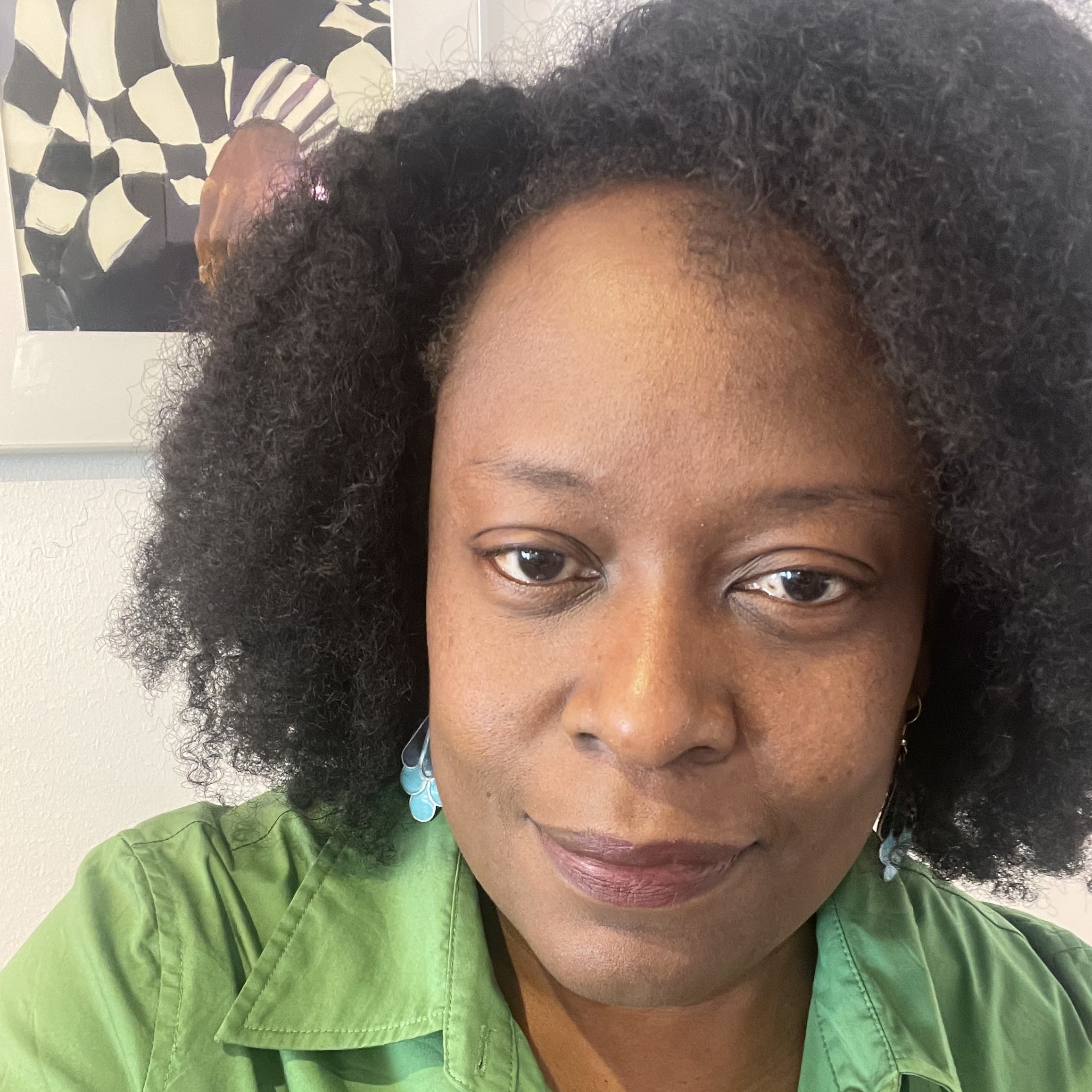
Mwila Agatha Zaza is a Zambian-Finnish author and development professional currently living in Helsinki, Finland. Her debut novel, The Pretenders, was born in Singapore, where she spent three years as a trailing spouse and rekindled a long-dormant love of writing. Her latest novel is set in Helsinki.
Mwila Agatha has spent most of her career in fundraising and communications in the international development sector. She has lived and worked in Ireland, the former Soviet Union and New Zealand. She holds a Master’s in Equality Studies from University College Dublin.
Her writing has appeared in The Johannesburg Review of Books and Ubwali Literary Magazine.
When she’s not talking to her plants, she’s exploring Helsinki’s libraries and galleries and trying not to step on the Lego that lives on her living room rug.

BY NKATEKO MASINGA
This conversation took place between Helsinki, Finland and Pretoria, South Africa, via email.
Nkateko: Hello, Mwila. Thank you so much for agreeing to have this conversation with me. Congratulations once again on being shortlisted for the Ubwali Hope Prize.
A Time to Ask reminded me of a TV show I used to love when I was growing up; it was called Suburban Bliss, and as the storyline progressed, it was clear that the title was an oxymoron because the lives of the characters were anything but blissful.
In my initial reading of the story, I found myself overly critical of Adam, not only because of the mistakes he has made in his marriage but also because it feels as if he is waiting for the right moment to address a situation affecting his loved ones and by extension, community.
Upon deeper reflection, I realise that I saw myself in him and that triggered me because my own inaction in real-life situations has had unfortunate consequences. The situation that Adam is in is urgent but also extremely sensitive, hence the title.
What inspired this story?
Mwila: I’m glad he has an effect on you. I’d be very disappointed to have a character that leaves no impression at all.
He is not passive, he’s powerless. It’s not about his inaction — there is no action he can take to change anything. His sole task is to uncover the extent of the damage his friend has caused.
Adam has found himself in a situation completely beyond his control and his reaction is perfectly normal. His first defence is this can’t be happening — not to me, not to my wealthy comfortable family with our exceptional heritage. Migrants like him interest me, because when you add class to migration there is just so much you can explore in your writing.
The original idea came from a news article I read years ago about a band, one of whom was arrested for sex crimes. This left the rest of the group lost, realising that their friend had hidden his horrific crimes from them for most of their adult lives. I didn’t write about the band, but one of them said something like the worst moment in his life was going home to speak to his children. The other point I took from it was how oblivious we can be to the other people who live alongside us.
In its first iteration, the story was set among quite a “generic” middle class family – they had no specific heritage, or rather it was blurred. But when I changed a few names to Zambia names (because I always find it really hard to think of names) it took on a new life and became a story that layers class, migration and social expectations – it becomes a story about people who expect to be safe because they are wealthy.
Also, the story couldn’t be about an external threat — say police or other institutional racism, drug dealers or a robbery, the enemy had to be one of them. It can’t be the result of a poor or desperate upbringing — so I brought in references to his family back in Zambia and allude to intergenerational affluence.
Nkateko: I hear you. It’s often said that you can’t judge a person until you’ve walked a mile in their shoes. We all think we would do better in a particular situation, until it actually happens to us. I judged Adam too harshly. His reaction, especially as a husband and father, is understandable.
What does your writing process look like? Do you get an idea for a piece and then immediately follow it to completion, or do you let your thoughts simmer for a while before putting pen to paper?
“I sometimes get into an analysis frenzy — a phase when I’m taking other people’s work apart and analysing it — asking questions about their sentence structure, grammar and plot. I’ll ask myself why something has an emotional impact on me, or doesn’t.“
Mwila: I wouldn’t say I have a process. A Time to Ask came quickly because I had a deadline. It was also based on a nearly complete concept — in fact, the story has already ended and this is almost an epilogue.
I prefer to just play with words and stories. I have a Substack and an Instagram page where I post articles and micro-fiction. This allows me to satisfy my need to write casually at my own pace. I write for work as well — I work for an organisation called Global Fund for Widows — so on days when, for instance, I’ve been writing widows’ stories, I won’t write for myself at all. I actually consider myself lucky to have a job that makes use of my passion for writing, as it is, most days provide me with some satisfaction.
I always have thoughts about plots and characters simmering and I’m always writing something, but I rarely offer it for publication — when I do it quite often looks nothing like what I began with. I find that as a character develops they take over the story and you start to know more about their world. Of course there are a great many characters that never make it to a page, they never even get a full story. They just dance around in my head for a few months before they slink away.
I’ve written three novels. The first was a vampire novel that thankfully will never see the light of day. Writing it was a linear process — I started at the beginning and made my way to the end. Writing my published novel, The Pretenders, was chaos unleashed. I began with two characters who may have been brothers and no idea what I would do with them. At some point I even had a mad scientist in the mix. I changed genres, protagonists, antagonists, settings and then eventually I had something that read like a novel.
Nkateko: That’s incredibly inspiring. I’ve just read the synopsis of The Pretenders in Goodreads and I am very intrigued. I’m adding it to my “Want to Read” list. It is the beginning of winter in South Africa and I am struggling to adjust to the cold (it shocks me every year) so I am making a list of books to snuggle up with as the cold intensifies. Do you read a lot when you are in the process of working on a book? I know of writers who try to limit external influences while they are working on new material, while others find it a necessary respite to be able to retreat into the world of another’s mind. Which of these categories do you fall into?
Mwila: I’m not sure, I’ve never really thought about it. Whether I’m reading more or less, I will sometimes get into an analysis frenzy — a phase when I’m taking other people’s work apart and analysing it — asking questions like their sentence structure, grammar and plot. I’ll ask myself why something has an emotional impact on me, or doesn’t.
I’m very open to external influence – as distinct from copying. There are some amazing writers who I would be pleased to be compared to. Being influenced by their work helps me dream bigger and practically helps me aspire to high-quality work. Influence can lead a writer into new topics and genres, it helps you explore what is possible. Good science fiction or fantasy might help your worldbuilding even though your work is set in the real world, cosy mysteries too. Cosies are often in fictional settings — you can explore new ways of describing relationships between plot and setting from them.
Of course one has to be honest — sometimes I read an amazing book and I think “I can never do that”. Which can be disheartening, but it can help you identify errors and weaknesses in your work — plot holes and other things, which can help you strengthen your work.
The Pretenders will be reprinted soon, so I’m glad to have one more reader.

Nkateko: Oh, absolutely. I believe that honing one’s authorial voice is a lifelong endeavour, and that the process requires an openness to being challenged, inspired, shocked, and influenced by the work of others. There is a lot to learn from reading extensively, across genres and on unfamiliar topics too. Do you have any favourites that you go back to frequently? I personally have books that I revisit a few times each year for different reasons, the type of books that demand you to have a copy in your house, car, office, everywhere. I suppose e-books are a convenient alternative to this but I am having a tough time making the switch to digital books.
Mwila: There are books I revisit but I wouldn’t say yearly. Evelyn Waugh’s Brideshead Revisited, Graham Greene’s The End of The Affair and Zadie Smith’s White Teeth. I’ll add History of Violence by Édouard Louis and The Vanishing Half by Brit Bennett as more recent favourites. I have a pile of books that have survived all my moves such as Black Voices, edited by Herbert Hill, and a few books that belonged to my father.
I’m quite open to e-books, but Helsinki has an excellent library system that keeps me busy. I will resort to e-books when I’m experimenting with someone new or for example — there are a lot of self-published books that never make it to print. I am a big fan of audiobooks, but they need the right narrator and some stories simply don’t work in audio form. E-books have enabled me to read many authors especially from Africa and Asia who might not be writing what the general public wants to read — things like romance, thrillers and women’s fiction. These are the kind of writers that I like to support because I feel they are limited — the audience in Africa that would be interested in them simply either don’t have the resources to buy their books or have never developed the skills of reading for fun. In Europe, the Americas and Asia reading is a pastime enjoyed by almost every class — places like India have a huge internal market. Many people in Zambia, for example, think reading is for learning (as in textbooks and informational tomes) and the most popular titles are things like Think and Grow Rich. The idea that reading is a form of enjoyment has a long way to go.
This kind of returns to e-books, I think e-books have a lot of potential in Zambia. But it’s a chicken and egg situation — more interest in reading would encourage greater availability, but without availability it’s hard to generate more interest.
Nkateko: I think that we are doing better now at instilling a culture of reading for pleasure here because a lot of public figures are writing children’s books and thus influencing parents to buy books and read to and with their kids.
E-books are tricky territory for me because I have a general disdain for screens and would have trouble enforcing rules regarding screen time if my future children or any children I looked after were reading on electronic devices. Perhaps Kindle is the way to go in that case. Then there is the argument about environmental sustainability, because years ago we were told that going digital meant that we were cutting down less trees and thus saving the environment, but technology has detrimental impacts to nature too!
Do you think that there is a way to change the narrative regarding recreational reading in Zambia? Perhaps through educational and entertaining reading campaigns aimed at children?


Mwila: At this point it has to come from outside the home. Too few people have a love of reading to pass it on to their children. On the other hand, too many things are left to NGOs with limited funding and with goals and outcomes they have to prove to supporters. Libraries are definitely the answer. Safe, accessible libraries, with friendly caring staff. Once societies come to trust these places and trust that they are there for the long run, children will be encouraged to hang out, play and read. They’ll meet friends there instead of on a street corner. If we can develop and share relevant yet fun books — contrary to popular belief they do not have to be local, and the protagonist doesn’t have to look like the reader — then kids will read.
The other thing we can do is raise the standard of our marketing and comms developed for local markets in places like Zambia. Over the past few decades we’ve fallen into the trap of “talking down” to consumers because they have low incomes and low literacy rates. Even TV and popular social media channels speak to their consumers as if they are incapable of growth or change — I mean here that these channels assume that an adult, if illiterate, will always be illiterate and, moreover, have no interest in developing the skills their audience does have. Which is in contrast to the concept of using the media to spark and nurture education.
As for writers, one role we could play is to put our stories in print and disseminate them on paper, as books, in our countries. Reading online enables us to build an audience globally and in greater numbers than we’d ever do at home and this has enabled us to have more writers, prizes and opportunities than ever before — but paper, for people in Zambia, is far more accessible.
Nkateko: Those are very solid points. We need our governments to prioritise funding for community and school libraries. It cannot be left to private organisations.
Our national broadcaster in South Africa, the SABC, used to produce and air a lot of educational content for adults and children, but that content has now been shifted to DSTV and other subscription-based services. I remember that there was a campaign promoting Adult Basic Education and Training (ABET) on TV when I was younger. It was a comedy depicting the lives of people going to “night school” and I loved it. It was funny, relevant and wholesome. There was also a show that used to air every election year, with the finale airing towards voting which taught people about the importance of voting and the impact that their vote had on the future they wanted. I miss that.
Are there free community newspapers and magazines that writers could collaborate with to ensure that their stories reach the people, and also in local languages as well as English? There is so much potential in that idea!
Mwila: It’s an old idea that has fallen out of favour. Unfortunately most of us writers still have to have a day job to make ends meet, many of us have these ideas but don’t have the time to invest in them.
It would be interesting to see what stories would be written if we had more Zambian writers from less affluent backgrounds.
Nkateko: I agree. It’s very difficult to juggle a writing career with full-time employment elsewhere. I believe that there is a need for more fully-funded writing residencies, fellowships and scholarships specifically for African writers. The Miles Morland Writing Scholarship is one that I have admired for many years. There are so many stories and ideas that need to be told and implemented; we just need the funding and support to make it all happen.
Thank you again for having this conversation with me, Mwila. It has been lovely speaking with you. I wish you the very best with the outcome of the Hope Prize and I am looking forward to reading more of your work in future.
Mwila: Thank you Nkateko, it’s been lovely chatting. I’m looking forward to reading the rest of the interviews in this series.
Nkateko Masinga is an award-winning South African writer whose poetry has been translated into French, Bengali, Tamil, Kannada and Romanian. Her latest book, Daughter Wound, was published by UK publisher Hazel Press in April 2024 and was named Book of the Week at the London Review Bookshop in the first week of its release.


Great post , thank you for sharing.